Moving on up – the Roussillon winemakers taking the region forward
Roussillon is awash with talent. New generations from established families rub shoulders with outsiders in search of the next winemaking frontier and a place to call home. As a result, Roussillon is an exciting melting-pot of talented individuals enthralled by the region’s natural beauty as much as its winemaking potential.
Catalan origins and culture permeate every aspect of life in Roussillon. It is the hot South but with plenty of cooling influences. It is arid, but it has always been, so vines are well adapted and growers have learnt how to manage vineyards in extreme conditions. Through hard work, tenacity and vision, Roussillon’s winemaking pioneers are paving the way for many.
The estates of Lafage, Gérard Gauby, Le Soula or Calvet-Thunevin, to name but a few, have done much to lift the image and highlight the potential of the whole region. Here we highlight some of the individuals who continue to move the region forward through terroir-driven innovation, low-intervention winemaking and the revival of historic styles.
It is Roussillon’s fragmented landscape and myriad soil types that make it a hotbed for experimentation, driving winemakers to seek the purest expression of their vineyards.
In Espira-de-l’Agly, a few miles from Rivesaltes, brothers Benoît and Sébastien Danjou focus on single-vineyard wines from grapes grown on a variety of soils, from clay and limestone to schist. Domaine Danjou-Banessy follow their single-vineyard approach across 17 hectares planted with vines with an average age of 60 years and farmed following agroecology principles. The Estaca vineyard features soils of marl and schist, with silica and a trace of iron. The Truffière vineyard is set on black schist and limestone. Both find their expression in La Truffière Rouge IGP Côtes Catalanes or Estaca Rouge Côtes du Roussillon Villages.
Hervé Bizeul at Clos des Fées has been exploring Roussillon’s mosaic of terroirs across vineyards in Vingrau, Maury, Tautavel, Calce, Lesquerde and other sites. Through exploration, trial and error, they developed a deep understanding of each area and the suitability of different varietals to the individual geology, climate and nature of each plot. Syrah, Grenache, Carignan, Cabernet Franc, Tempranillo, Sémillon, Pinot Noir are some of the varietals planted. Measured cellar work with minimum extraction to retain purity is carried out to let the wines express their identity. Seek out Les Sorcières Côtes du Roussillon or any of the Clos des Fées ‘Vins de Lieux’.
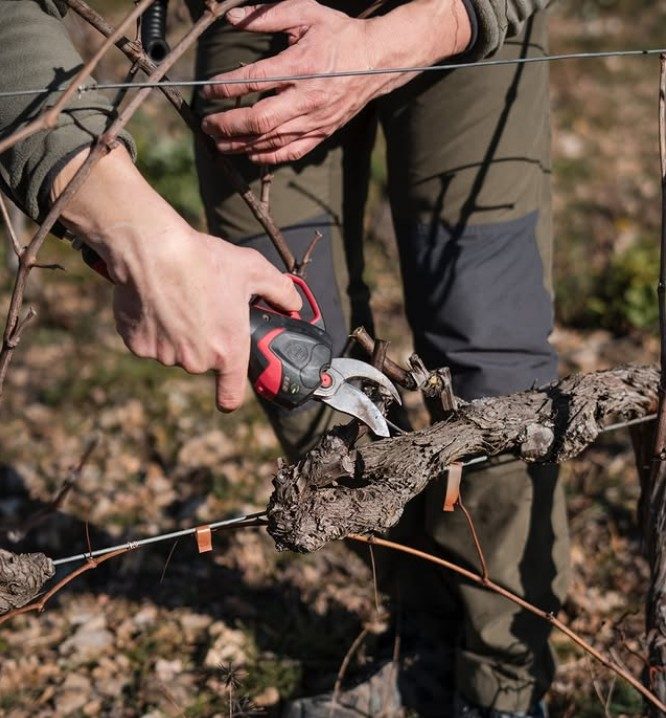
For many of Roussillon’s best producers, it is through limited intervention both in the vineyards and the cellar that a wine’s full potential is unlocked.
At Mangin-Torredemer, longtime friends Romain and Thomas, both grandsons of winegrowers, work their 40-hectare estate organically. Vineyards are spread across the main terroirs of Vingrau, some worked by horse. Intervention in the vineyards and in the cellar is limited to a minimum and happens only where necessary. By doing so, their aim is to produce fresh, precise and balanced wines. Seek out their orange wine made from Muscat d’Alexandrie and Muscat à Petits Grains.
Roussillon’s winemakers are also pushing forward with the production of new wave wines from well-known appellations and the revival of historical styles.
Dom Brial, on the terroir of Baixas is a noteworthy example. Awarded best co-operative in Europe, it brings together 200 winegrowers. A century-old history, ongoing commitment to organic farming and a rigorous process throughout all stages of production result in a wide range of quality wines, from dry whites, reds and rosés, to rare, aged VDNs.
Over in Maury, from organic and biodynamic vines, Mas Amiel, an estate famed for its Maury Doux VDNs, successfully developed its production of fine dry wines, under the impetus of Olivier Decelle. A stock of old vines and top terroirs, coupled with blending expertise helped produce fine Maury Sec AOP red and Côtes du Roussillon AOP white. Their latest range of zero sulphur natural wines include 3 varietal reds and a blended white from the Côtes Catalanes, made using natural yeasts.
Domaine de Rancy, the oldest wine estate in Latour-de-France, is where Brigitte Verdaguer’s dedication to VDNs comes to life. Domaine de Rancy produces one of Roussillon’s most unique style: Rancio (VDN or dry). They produce not one but three Rancio Sec, using Roussillon’s key varietals: Macabeu, Carignan and Syrah. Domaine de Rancy’s Macabeu Côtes Catalanes Rancio sec seduces modern palates with its Sherry like acidity, dry nutty fruit and cutting acidity. It has become a favourite of the sommelier community.
These estates like many others in Roussillon are working tirelessly to make the best wines from their vineyards and enthuse today’s wine drinkers. Their dedication and resourcefulness will help face challenges and continue to shape the future of Roussillon’s winemaking for generations to come.
Find out more about Roussillon wineries here: Annuaire des acteurs du vin – Vins du Roussillon