
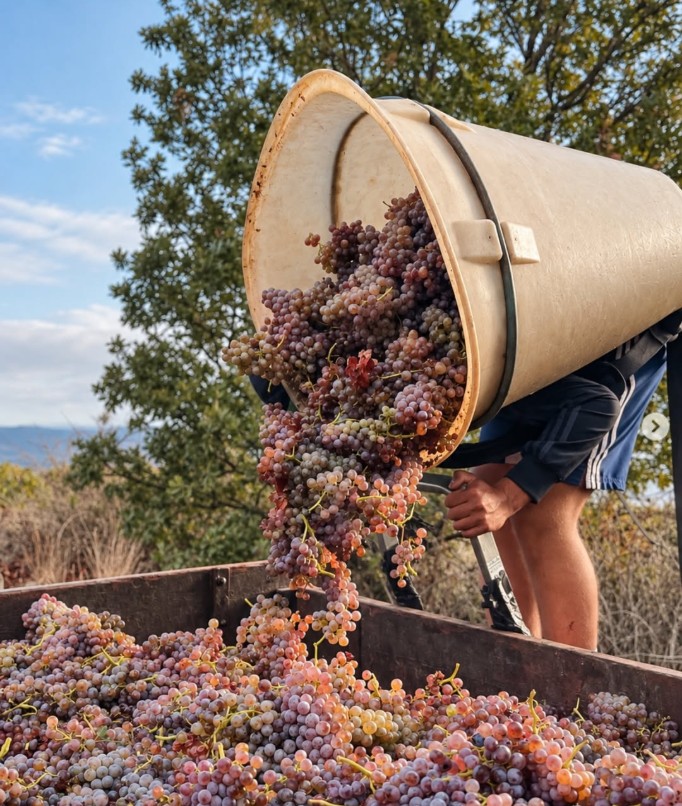
2026 harvest, a ray of hope for Roussillon winemakers
After consecutive vintages affected by severe drought, the 2026 growing season in Roussillon brought renewed hope to the region’s winemakers.
Water was the decisive factor in the success of the 2026 Roussillon harvest. Much needed winter and spring rainfall (over 500mm) helped replenish water levels and bring equilibrium back into Roussillon’s vineyard, creating favourable conditions for a healthy, high-quality harvest.
Roussillon’s 2026 harvest was marked by an unusually early start. The first grapes to be picked, traditionally Muscat à petits grains, were brought in as early as July 23rd. In contrast, the first 2025 Muscat was harvested on 5th August.
Early budburst, 15 days earlier than normal, set the tone for an accelerated growing season. An exceptional weather pattern, with consistently high temperatures throughout spring and summer coupled with extreme heat recorded from June onwards boosted healthy growth in the vineyard.
Consecutive heatwaves in June and July with average temperatures oscillating around 40°C and some of the driest conditions on record put pressure on agriculture. Roussillon was not spared the ferocious fires that hit France, burning a total of 5000ha of vegetation, including 200ha of vines in the region.
Late July however, the cooling Tramontane allowed temperatures to drop to 25°C, and sparse showers, provided a brief respite before a return to extreme heat conditions over the first two weeks of August. Salutory rainstorms from 17th and 18th August onwards brought much needed moisture to the vineyard alongside cooler temperatures. A huge storm on 25th August further contributed to the rehydration of plants and berries – 15mm rainfall was recorded near Aspres and nearly 50 mm in the Agly.
The last heatwave, first week of September, ended with another rainstorm bringing moisture and cooler temperatures back to the region.
By mid-September, most producers had finished picking, reporting a high-quality harvest with good acidity levels. Some healthy grapes were lost to the effect of extreme heat, which affected yields. The work of winemakers at the sorting tables to eliminate dried berries was crucial.
On average however, yields were up by 10hl/ha on 2025. An encouraging increase after the very small harvests of the past drought years, but a way to go still to get back to more commercially viable production levels of the early 2020s.
Roussillon showed resilience in 2026. Supported by useful breaks in the weather and the adaptation of the region’s vineyards to water scarcity and extreme heat, some of the winemakers were able to mitigate the impact of weather conditions to produce high-quality grapes and trying to maintain yields, bringing much needed relief and hope for the future.